On this side of the world, west of the Mediterranean and east of the Pyrenees, a lot of milk is produced: from cows, sheep, goats and, more recently, even buffalo. Cattle, sheep, and goat farmers have often been transhumant shepherds since time immemorial, moving between the best summer pastures in the Pyrenees and the milder winter climate of the plains. Although there are still herds that transhumance from the plain to the Pyrenees, the livestock is now more stable. However, only sheep have produced an indigenous breed: the Ripoll sheep. These herds serve multiple purposes: milk, meat, wool, and hides for tanning.
Usually, the milk has been consumed fresh, or has been converted into processed products with a short shelf life: olleta and rag cottage cheese, matons and soft cheeses, which were often curdled with herbs. Generally, matured cheese was quite unknown. Until well into the late 20th century and, especially, the beginning of the 21st, cheeses had been confined to mountain areas, limited by transportation and preservation needs. As we know from diaries and recipe books up until the 19th century, dry and aged cheese was used in the kitchen and was also brought to the table. Although high mountain cheese was known as serrat, none of them had a specific name or a designation referring to a place.
The cheese culture and industry have expanded as society has become more aware of the environment, rural life, and sustainable, socially responsible farming. Today, cheese factories are dynamic and innovative. They are managed increasingly by small, independent farmers with an artisanal vocation.
Dairy products with the 2025-2026 Girona Excel·lent seal
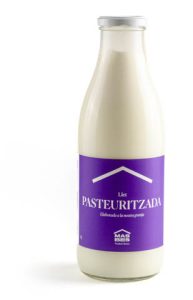
Granja Mas Bes pasteurized cow’s milk
In 1993, the first cow qualified as Excellent in the Girona region was born in Mas Bes. And since then the awards have not stopped coming to the Viñolas family, who have done everything they can to have the best cattle and produce some of the best milk. The pasteurized milk from Mas Bes, in Salitja, is the result of so many years of work well done.
Company: Granja Mas Bes
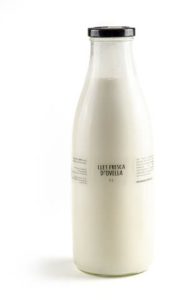
Fresh sheep’s milk
Anna Pijuan and Salvi Casas, the third generation from Mas Casas in Cruïlles, have a flock of more than a hundred sheep of the Lacona breed, with which they produce this high-quality, especially sweet and digestible milk. Anna Pijuan takes care of the factory and Salvi Casas takes care of the fields and the farm. Committed to regenerative agriculture, with the utmost respect for animals and the land, they have a rotational grazing system with enclosed plots and corridors, which open and close according to the needs of the livestock and the land, and which is fertilized by the sheep’s passage. They have a farm in Cruïlles and a factory in La Bisbal, with a shop where they sell their products, which range from fresh dairy products to cosmetics based on sheep’s milk and wool products.
Company: Granja Mas Casas
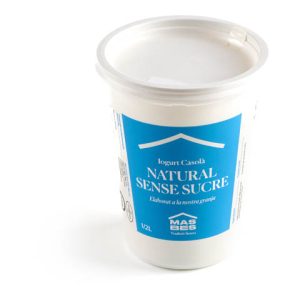
Granja Mas Bes Natural Yogurt Without Sugar
Mas Bes, in Salitja, a parish of Vilobí d’Onyar, in La Selva, is a farmhouse with a dairy tradition, which tells the livestock history of the Viñolas family. In the second half of the nineteenth century, Narcís Viñolas settled in the farmhouse and began farming with two Friesian cows. Five generations later, the farm has around 800 cows in production. Natural, unsweetened yogurt is made with their milk and lactic ferments and that’s it, and it’s so balanced that you can eat it without sugar, honey or fruit confit.
Company: Granja Mas Bes
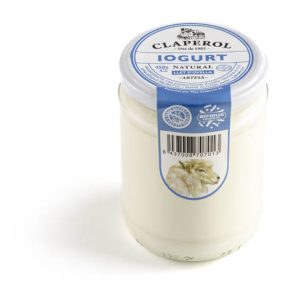
Natural Sheep’s Yogurt
Emili Domènech Tort started his project with goats and by selling the fresh cheeses he made at Mas Claperol, in Sant Feliu de Pallerols. He now works out of the kitchen at Mas Subiràs in Pla de Dalt, in Olot. Later he sold the goats and began working with cow’s milk. Now they also work with goat and sheep’s milk. He and Mercè Navarra had twins in 1988. Brothers Jordi and Oriol made a commitment to organic production and sustainability, and now market their sheep’s yogurt, made only with pasteurized sheep’s milk, lactic ferments and nothing else. All their products are made in returnable glass containers and under no circumstances do they use plastic.
Company: Mas Claperol
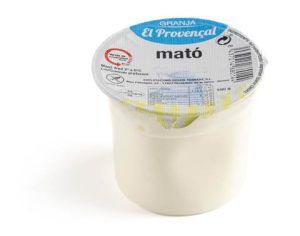
El Provençal Mató
The Bosch Torrent family makes mató in the way that most mató makers in Catalonia do: by flocculating the milk with calcium chloride. They produce it on their farm with the milk of their cows, which they raise on the El Provençal farm, in Riudellots de la Selva. The farm has its origins in the late eighteenth century at Mas Fàbregas, which was affected by the widening of the main road. At the end of 2010, the Bosch Torrent family located the modern facilities very close to where the century-old farmhouse was located.
Company: Granja El Provençal
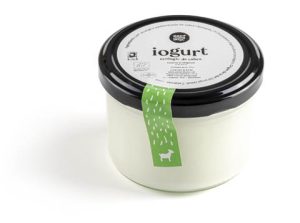
Pasturabosc Organic Goat Yogurt
With the milk from the 115 goats they have, Judit Nadal Feixas and Joan Martí Quer produce six types of cheese and one yogurt. Their natural goat’s yogurt is made only with goat’s milk and lactic ferments. Nothing else. Everyone who tries it finds it so delicious, they say it’s great on its own.
Company: Pasturabosc
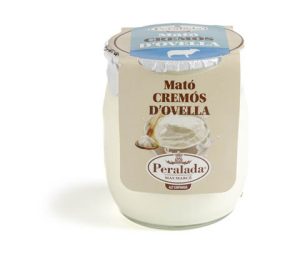
Creamy sheep’s Mató
Peralada Mas Marcè merges two ways of treating curdled milk to obtain this creamy sheep’s mató. First of all, they make a Laconian sheep’s milk mató, following the style of central Catalonia. They add calcium lactate to the milk, to flocculate the solids – fats, protein, carbohydrates – and separate them from the whey, part of which they reserve. Finally, following the technique of the Empordà recuits, they emulsify the solid part clumped together with whey, so that this curd is softer.
Company: Peralada Mas Marcè
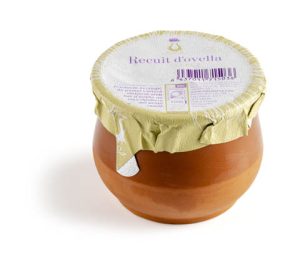
Recuit d’ovella ecològic – Mas Marcè
The division of L’Empordà region into the counties of Alt and Baix Empordà is not just on administrative criteria: one makes curd cheese in a cloth and the other in a pot. L’Alt Empordà, the region to which Siurana belongs, is the territory of curd cheese in pots. In the municipality where Mas Marcè is located they have never stopped making sheep milk curd cheese using the traditional method: macerating the artichoke thistle in water, grinding it in a mortar to extract the chymosin, straining it, pouring the rennet into the pasteurised milk, mixing it and packing it immediately into ceramic pots.
Company: Peralada Mas Marcè
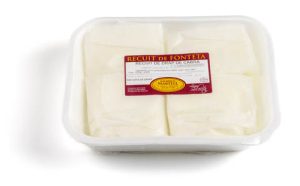
Fonteta Recruit
The Fonteta recuit was born in 1990, when the Martell family decided to recover the ancestral tradition of cloth recuits, so typical of El Baix Empordà and Les Gavarres. Traditionally, they were wrapped with recoverable yarn cloths, but for food safety reasons these were replaced with cellulose cloths. The most appreciated of their recuits is the one made with goat’s milk, soft, delicious and elegant.
Company: Recuits de Fonteta
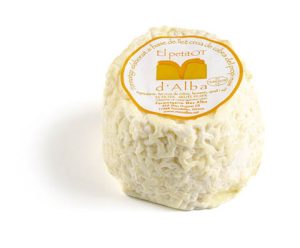
Petitot
Petitot is a soft cheese, made from raw goat’s milk, with a rough, orange and white rind, with flecks of mould. The Huguet brothers say it is essential to eat it with the rind, as they believe that soft cheeses with washed rinds should be eaten whole because the rind adds many nuances. This cheese, aged for ten to fifteen days, is a tribute to little Ot, the youngest son of Martí Huguet. The nose is vegetal with a hint of goat’s milk. In the mouth, it is acidic at the beginning, with a salty touch, with a lot of complexity at the end, hinting at mushrooms and dried grass.
Company: Mas Alba
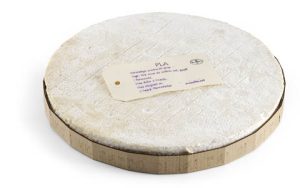
Pla d’Alba
Mas Alba is a family company that farms in Terradelles (Vilademuls), with 100 hectares of forest and farmland and a herd of 300 goats that are milked every day to make their cheeses. Pla d’Alba is a raw goat’s milk cheese that is soft and elastic with a pale ivory-coloured rind due to the Penicillium candidum mould. It has an aroma of freshly picked wild mushrooms and is buttery on the palate, with a fresh acidity. Martí Huguet gave it this name in honour of Albert Pla, whom he considers to be his personal soundtrack.
Company: Mas Alba
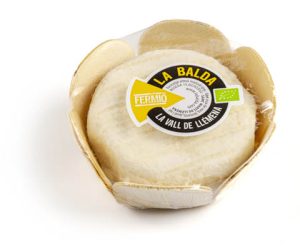
Fermió
The small cheesemaker of La Balda was established in 2012 in the Llémena valley, at the foot of Rocacorba. With its soft paste, flowery rind and extraordinary lactic creaminess, Fermió has a spectacular tendency to proteolysis (breaking down the proteins) when it ripens and reaches its maximum aromatic potential. Pablo Garcia makes this cheese every week with organic raw cow’s milk from Can Frigola de Borgonyà, in Pla de l’Estany.
Company: La Balda
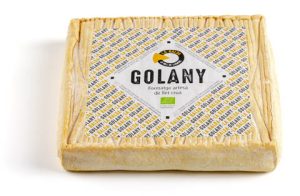
Golany
La Balda is a cheese factory founded in 2012 at Mas Vilotxa, in Granollers de Rocacorba, in the Llémena valley. With organic certification, it makes artisanal cheeses with raw milk from nearby farms. Golany is a delicious and creamy raw cow’s milk cheese, with a soft texture and mixed rind, mouldy and washed, which has matured for three weeks in cellars.
Company: La Balda
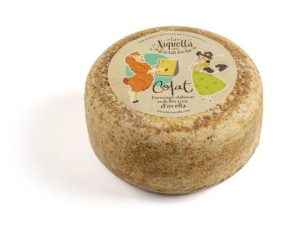
Cofat
This sheep’s cheese is related to historical mountain cheeses. Made with raw sheep’s milk and enzymatic coagulation, it is a hard pressed semi-cooked cheese with brushed natural mould, matured between six and twelve months. It is one of the most emblematic cheeses from the cheese factory and rural house of Oriol Rizo and Irma Casas.
Company: La Xiquella
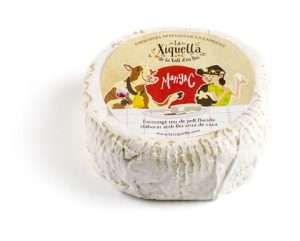
Manyac
In 2014, Oriol Rizo and Irma Casas settled at Mas El Xiquillo, in the Vilallonga neighbourhood of Vall d’en Bas. They turned the property into a rural tourism business and founded the artisan cheese factory La Xiquella. Surrounded by large farms producing excellent milk, they make cheeses every week with raw cow’s and sheep’s milk. Manyac is a delicious cheese made with raw cow’s milk and mixed curd, with a soft texture and a powdery white rind.
Company: La Xiquella
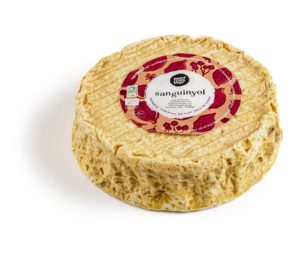
Sanguinyol
The couple Judit Nadal Feixas and Joan Martí Quer founded Pasturabosc in 2012 in Gaüses, a parish of Vilopriu, in El Baix Empordà. She is a cheesemaker and he is a shepherd of 115 goats, which he keeps according to the strictest criteria of organic production. Sanguinyol is a raw goat’s milk cheese, curdled with goat’s rennet, with a washed rind and semi-soft texture, matured for two months.
Company: Pasturabosc
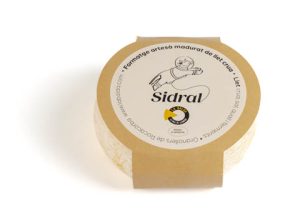
Sidral
Sidral, from Formatges La Balda, is an organic cheese with a soft texture and mixed rind (flowery and washed), made from raw cow’s milk from Granollers de Rocacorba. Pablo Garcia is committed to collaborating with small craftsmen, like himself: the Serps brand, from Celrà, which produces a natural, unpasteurized cider with which this cheese is washed. The result is a creamy, straw-yellow cheese with a creamy texture and a naturally moist and slightly flowery rind that is completely edible. It has a complex flavour that combines the aromatic power of the crust and the balanced notes of the paste with citrus and nutty sensations.
Company: La Balda
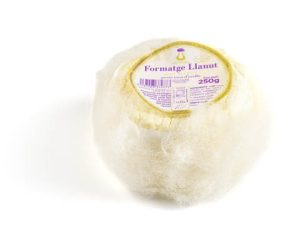
Llanut sheep’s cheese
Llanut de Mas Marcè is one of the cheeses praised by Carlo Petrini, founder of the international Slow Food movement. Llanut is a soft cheese made from raw milk from organic Ripoll sheep, made with vegetable rennet, wrapped in wool, with the intention of being original and of enhancing their aim, their effort to restore the Ripoll sheep breed.
Company: Peralada Mas Marcè
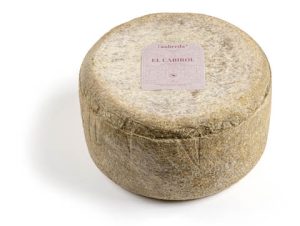
El Cabirol
At Mas l’Arbreda they aim to make products with everything the farm can produce. Currently they have a cheese factory, an organic allotment, beehives for honey, an area of truffle trees and an olive grove, all on volcanic soils. Cabirol is a matured hard cheese made with raw goat’s milk, which is produced in large pieces to allow it to mature longer, from three to five months. The rind ends up covered with natural mould and brings notes of undergrowth as it ages; the texture is one of melting in the mouth, with flavours that progress from lactic to toasted, with spicy sensations, depending on whether the time in the cellar is extended.
Company: L’Aubreda
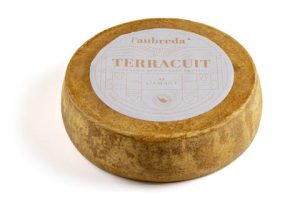
Terracuit
At Mas l’Arbreda they make this hard cheese matured with raw cow’s milk. Melting in the mouth, Terracuit is a cheese of enormous aromatic complexity, made solely with milk from a small herd of cows fed on fodder from the farm itself, without silage. With a long maturation period of more than ten months, the rind is washed with yeast, which gives it an orange color and increases the aromatic complexity.
Company: L’Aubreda
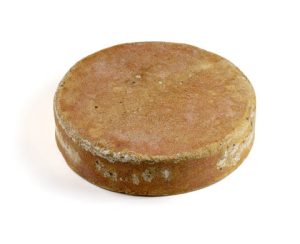
Baldat
A 20-kilo piece of pressed cooked paste, made from raw cow’s milk and matured for a minimum of twelve months, is a cheese unprecedented in our country. To make Baldat, this cheese factory in Granollers de Rocacorba, in El Gironès, uses raw milk from organic cows in the Pyrenees. Eleven litres of milk are used to make a kilo piece.
Company: La Balda
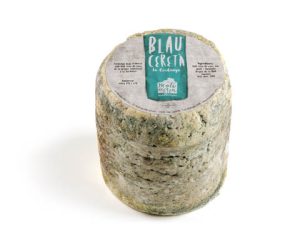
Blau Ceretà
Pere Pujol Claveria makes this blue cheese with raw cow’s milk, lactic ferments, rennet, salt and the mould Penicillium roqueforti. El Molí de Ger, in La Cerdanya, is one of the most representative dairies in the country, dedicated since 2007 to the production of cheeses with raw cow’s milk from its herd of Friesian with Belgian Blue crosses.
Company: Molí de Ger
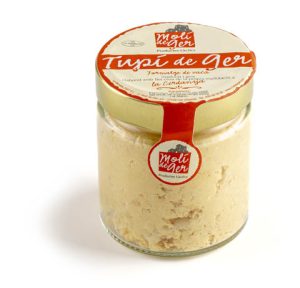
Tupí de Ger
Tupí is the typical cheese of the Pyrenees, invented by shepherds to regenerate dry cheeses. Traditionally it is fermented with wine, liqueur or brandy in an earthenware container, the tupí. At Molí de Ger, they follow the idea of making recycled cheese, with ugly pieces or ones that have dried out too much. They crush this cheese and give it a second fermentation in a vat with brandy and olive oil. The result is an oily, aromatic and spicy product.
Company: Molí de Ger