When the vegetable garden served as a gym for our parents and grandparents and when families and neighbours could no longer afford fresh food, they began preparing jars of preserves. Many people still maintain the healthy and sustainable habit of preparing vegetable preserves: broccoli and Girona chili peppers —the greenish-yellow one— preserved in vinegar, tomato sauces, whole tomatoes, sweet jams made from a single fruit or mixtures of various fruits and vegetables, secret or randomly created recipes, and, towards the end of summer, mushrooms preserved in brine. These are sweet and savoury preserves, and no single product is exclusive. Tomatoes are very versatile: stir-fried, cooked with peppers in a samfaina, preserved for winter salads and sauces, or turned into jam.
The preserves sector has grown in all areas: homemade, artisanal and industrial. Today we find small artisan businesses that have grown and industries that are committed to high-quality tradition, thanks to technological advances. Highlights include innovations in terms of new flavours, new products and the search for healthier products and more sustainable packaging.
Preserves with the 2025-2026 Girona Excel·lent seal
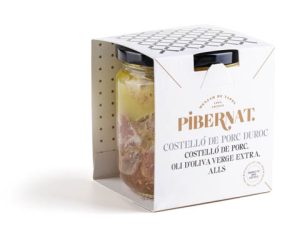
Duroc pork ribs
Pibernat is a small family business in the Les Tries neighbourhood of Olot, dedicated to preserves. This Duroc pork rib has been cooked at a low temperature for many hours in the traditional way; that is, as a confit with extra virgin olive oil and garlic. The result is a deliciously soft, succulent, aromatic meat, like the old confits that were made in rural kitchens in earthenware pots after a pig was killed for domestic use. The rib can be reheated in the pan or in the oven at 200 ºC for 5 minutes, or in the microwave oven for 45 seconds at 700 W.
Company: Pibernat
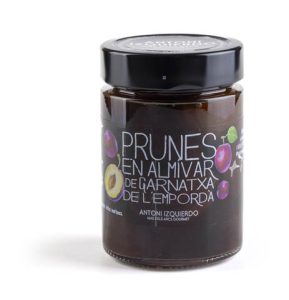
Plums in Empordà grenache syrup
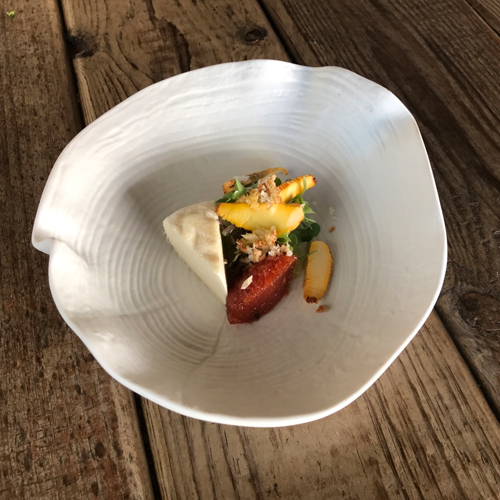
Fruit in syrup is a traditional Mediterranean preserve. In general, this fruit does not contain alcohol, but in many places they like to preserve it in liqueurs, wine spirits or wine. Chef Antoni Izquierdo Cruellas makes plums with lemon, orange, sugar, cinnamon and red grenache wine and recommends using them in either sweet or savoury dishes. He says they are excellent to serve with mi-cuit foie gras, curd cheese or ice cream. One of the highlights of these plums is the syrup itself, made from Empordà grenache wine, lemon and orange peel, sugar and cinnamon.
Company: Antoni Izquierdo Gourmet
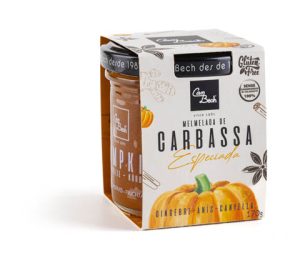
Pumpkin Jam
Pumpkin is one of the most versatile garden fruits. Beyond keeping it whole to eat fresh, in autumn it has a thousand uses, sweet or savory, hot or cold. Pumpkin jam is a classic, made on its own or with citrus fruits. At Can Bech, a company that began operations in 1981 in Fontanilles, in El Baix Empordà, they make their pumpkin jam with ginger, anise and cinnamon. With a dense texture, it is very versatile.
Company: Can Bech
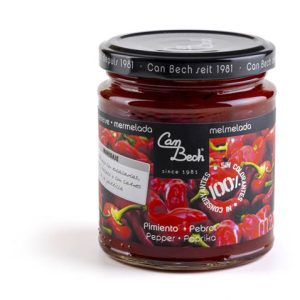
Caramelized Red Pepper Jam
Can Bech is an innovative company with a very large catalogue. One of its latest gastronomic innovations is caramelized red pepper jam. It has been designed to be combined with all types of grilled meat and fish, to be added to salads or to accompany mature cheeses and pasta dishes.
Company: Can Bech
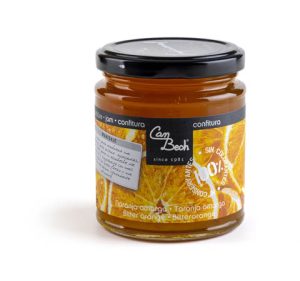
Bitter Orange Marmalade
The raw material is bitter orange, but the queen of marmalades has nothing bitter about it. It is all harmony, with just the right sweetness to compensate for the high acidity of the fruits of Citrus aurantium, the first cousin of the sweet oranges that we eat. Can Bech, available at stores and gourmet shops all over the planet, makes the most delicious marmalades with bitter oranges from Seville.
Company: Can Bech
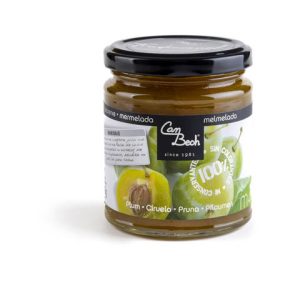
Green plum jam
San Joan plums and greengages are fruits that define the freshness of summer. Many orchards and gardens have plum trees of these varieties and hundreds of green plum hybrids born spontaneously from seeds scattered by happy people. This traditional jam is made solely with natural ingredients, from green plums harvested in the counties of Girona which are very healthy and tasty, and qualitatively remarkable. Its creators recommend adding it to salad dressings and meat sauces; using it to make cheesecakes, or eating it as part of a hearty winter lunch for a reminder of summer.
Company: Can Bech
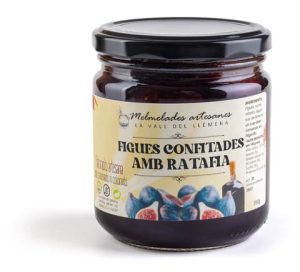
Candied Figs with Ratafia
Les figues confitades són un clàssic. I les figues ens arriben quan les cases enceten la ratafia, després de setmanes de maceració a sol i serena. Justament, Melmelades Artesanes de la Vall del Llémena confita figues fresques en un xarop a base ratafia, per impregnar la fruita amb la complexitat aromàtica del licor més tradicional de la gastronomia catalana.
Company: Melmelades Artesanes La Vall del Llémena
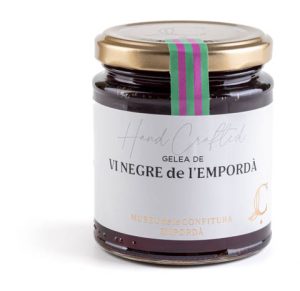
Empordà Red Wine Jelly
The Museu Confitura in Torrent became a sanctuary for fans and apprentices of the exquisite art of preserves from the moment it opened. The jams are made by hand in the traditional way, but with a willingness to investigate and a touch of daring. Designed to accompany foie gras and meat, this jelly is made with red wine from L’Empordà region, apple water, lemon juice, cinnamon, cloves, sugar and nothing else. It brings to mind a mulled wine made with fruit. It evokes those classic, delicious and spicy drinks, which were drunk at annual festivals and which had many different names, such as hippocras or clarea.
Company: Museu de la Confitura
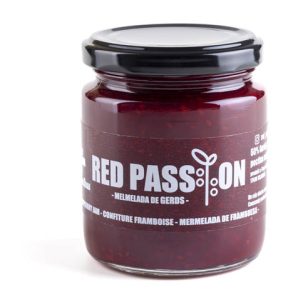
Raspberry Jam
Cristina Gil Ruiz founded Red Passion Berries in 2020 as an agricultural company, cultivating one hectare of organic raspberries, the largest raspberry plantation in Catalonia. To avoid waste, she started the jam-making project, initially with a shared kitchen, until 2023, when she inaugurated her own facilities in Viladrau and created the company Red Passion Berries. Her delicious jam, with a fluid texture, maintains the bright red characteristic of this mountain fruit.
Company: Red Passion Berries
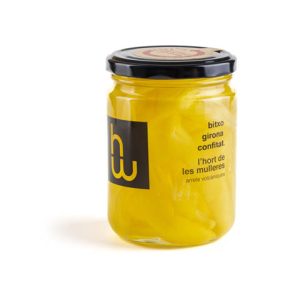
Girona Chilli Confit
Verdures de la Canya is a family business that has been producing seasonal vegetables since the 1960s. The preserved pepper is the king of pickled vegetables. This pale green or light-yellow pepper is a must in winter salads and an essential accompaniment to hearty meals. L’Hort de les Mulleres prepares this preserve according to a family recipe. The pepper is pickled whole for three weeks and then chopped and packed in brine and vinegar.
Company: L’Hort de les Mulleres
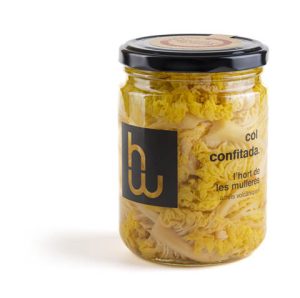
Cabbage Confit
Cabbage Confit is one of the classic winter salads, when the desire to eat legumes and cold meats increases. The vegetable confits of L’Hort de les Mulleres are made with the surplus vegetables they grow at Can Mulleres de la Canya, which they sold in Plaça Mercat d’Olot until 2005, when they stopped selling directly to the public.
Company: L’Hort de les Mulleres
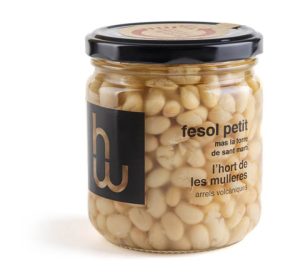
Mas la Torre Sant Martí Petit Fesol Beans
In 2005, Verdures de la Canya was founded, dedicated to sales in neighbourhood stores and restaurants. In 2019 it took a step further and launched a new project, the sister company L’Hort de les Mulleres, dedicated to transforming the products from the vegetable garden into preserves. One of the fruits of this project is the Mas la Torre Sant Martí Petit Fesol bean. For this simple pot of boiled beans, L’Hort de les Mulleres buys the raw materials from Mas La Torre from Santa Pau. They are delicious dressed with any of Girona Excel·lent oils and a small side of their chilli confit and cabbage confit.
Company: L’Hort de les Mulleres
Condiments and bases
Olive oil has been a key condiment, along with vinegar and salt and pepper. We call it simply oil, because we understand it is always made from olives, often from our own grove. Many people from Empordà make their own oil, always virgin olive oil, and for them, nothing compares to their own. And in many homes, they also make vinegar, which is also excellent quality. Very little salt is harvested. There are no salt flats, but we could be restored.
All condiments have the same purpose, to make food tastier. In fact, oil is for dressing salads, boiled vegetables, some pasta and bread, but especially for tomato bread. Oil is also used to preserve food, both plant and animal-based. Precisely, the oil used to preserve anchovies has resulted in an attractive, versatile condiment, which has long been used in homes to season char-grilled vegetables (escalivadas) and tomato and onion salads. Given the success of this seasoning and the market’s growing curiosity, some salted fish producers have adopted it and are offering their own seasoned oils. The most recent are oils seasoned with liquamen or garum.
For several years now, salted fish producers have been introducing a new condiment: liquamen, or garum, the aromatic liquid from brine-matured anchovies. Anchovy fillets caught in the spring, when the blue fish is fatty and flavourful, are matured longer, allowing the liquid to extract the finest scents of the sea. It is, of course, an appealing flavour enhancer, offering not just saltiness but also umami and other distinctive notes, such as the iodized sweetness of the sea.
Constant research, development and innovation have already led many companies to blend salt with sea or forest aromas. Therefore, we find salts reminiscent of candied anchovy and salts with aromatic herbs. They are used both to finish dishes and to marinate products that will later be preserved or cooked.
Stir-fry bases and broths are not condiments per se, but they do make dishes look more appealing. In fact, neither stir-fry bases nor broths are dishes in their own right; they are ingredients used to make other dishes.
Condiments and bases are essential elements of gastronomy, to make food attractive, enjoyable, appetising and, sometimes even an art form. They are also key elements to every culture, providing distinctive touches that make us different and invite us to explore the world. Gastronomic cultures have developed around their own landscapes and the subtle combinations of aromas and flavours.
Condiments and bases with the 2025-2026 Girona Excel·lent seal
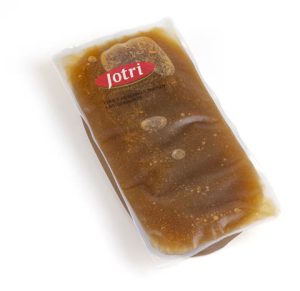
Fish stock
Fewer and fewer people are cooking fish, which has catapulted Cuinats Jotri fish stock to fame. The company was founded in a warehouse in Juià in November 2013. Their stock is so versatile that it can be consumed alone, as a broth, in toasted bread soup, pasta or rice, and also as a fumet for preparing paellas and fideuás or fish dishes with their cooked juice. This stock contains a variety of fish – monkfish, shrimp, and crab stand out – onion, tomato, carrot, celery, herbs and aromatic spices, flour, and oil.
Company: Cuinats Jotri
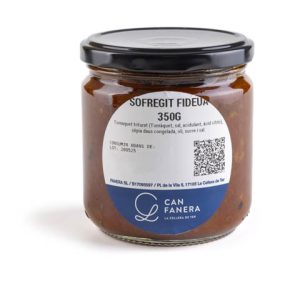
Fideuà Sofregit
The sofregit from this butcher’s shop in Plaça de la Vila in La Cellera de Ter is on the list of great traditional sofregits made by butchers. It is a classic tomato and onion sofregit with cuttlefish, designed for fideuás, but which can serve as the basis for a group of traditional dishes, such as a rice casserole or seafood rice, or even for meatballs.
Company: Can Fanera
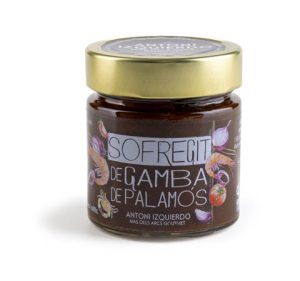
Palamós prawn sofregit
The best sofregit to date for cooking seafood has been created by Antoni Izquierdo, owner and chef of the Mas dels Arcs restaurant in Palamós. This sofregit, the result of years of work at his restaurant, is made with Figueres onions, certified Palamós prawns, crab, fresh tomatoes, olive oil, sugar and salt. It is ideal for cooking Empordà dishes successfully: fish and shellfish rice dishes, fideus, rossejat de fideus, suquets, sarsueles, and surf’n’turf soups and stews.
Company: Company: Antoni Izquierdo Gourmet
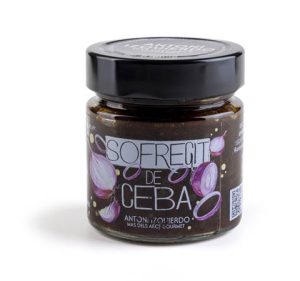
100 x 100 Onion Sofregit
Sofregit made only with Figueres onions, olive oil and a lot of patience is the basis of the most genuine Girona cuisine, rice dishes, fideus, potatoes with their cooking juice, platillos… A sofregit is understood to be the result of sautéing the onion very slowly to break down and concentrate its sugar content until it is caramelized and brown. Antoni Izquierdo, owner and chef of Mas dels Arcs, in Palamós, has been declaring this sofregit as the true basis for Empordà black rice for decades.
Company: Company: Antoni Izquierdo Gourmet
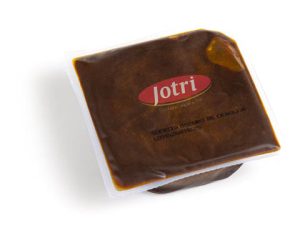
Onion Dark Sofregit
Josep Soler and Trini Salvà, founders of the company Cuinats Jotri, started as butchers in 1982 in the Market at Salt. Like most butcher shops, their establishments became observatories of society’s needs and therefore, laboratories of innovation, starting by saving customers work with ready-made dishes and laborious preparations. The versatile onion and tomato sofregit is a fundamental example: for rice dishes and dishes with meat, fish, mushrooms, vegetables, or surf’n’turf dishes.
Company: Cuinats Jotri
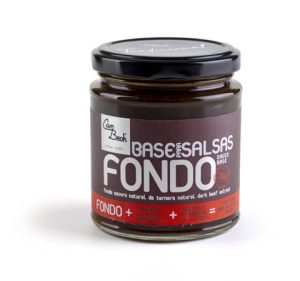
Natural Beef Broth
A deep dark background is one of the main bases that professional kitchens use to prepare some of the great foundation sauces. It is made from roasted white beef bones, which are boiled in water over low heat for 42 hours, with onion, carrot and sweet wine, without any additives or artificial flavouring. The result is an incredibly tasty concentrated broth that is recommended for enhancing the flavour of recipes.
Company: Can Bech
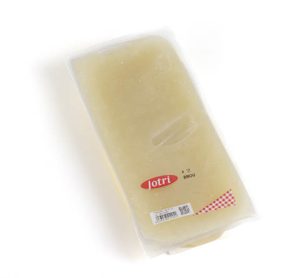
Broth
Cuinats Jotri makes its broth with water, chicken carcasses, beef and pork bones, potatoes, onions, carrots, leeks, beans, celery and salt. It is a classic broth for stews. Such a lot of work, making stew from scratch when there are only a few of you at home. This delicious broth is perfect with rice and fideus, pasta or fideus only, but you can also finish it off at home with some black sausage and a large meatball.
Company: Cuinats Jotri
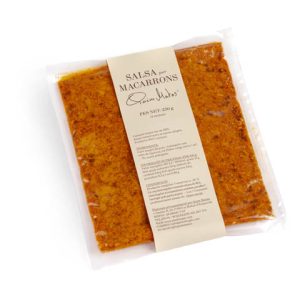
Macaroni Sauce
Macaroni is a pillar of Catalan cuisine. It is the most requested and longed-for traditional pasta dish. There are as many ways to cook them as there are families: with roast meat, with pork and beef, with pork only or with sausage meat, and a good sofregit, like the one that Quim Matas makes, and tomato. So that the juicy sauce sticks to the macaroni. Quim Matas’ sofregit is made with lean pork, cooked tomato, Figueres onion, extra virgin olive oil and salt. To top it off, many families still make a gratin of breadcrumbs and cheese.
Company: Quim Matas

Spring Selection Anchovy Colatura with Extra Virgin Olive Oil
Callol Serrats in L’Escala have taken another step in innovation: packaging their colatura with extra virgin olive oil. Ideal for seasoning fried and grilled fish, boiled vegetables, escalivades, salads or rice dishes and even for preparing steak tartare.
Company: Anxoves Callol Serrats- L’Escala
Sea preserves
The ports along the Costa Brava compete in the excellence of their salted products, a tradition that dates back two and a half thousand years. Currently, anchovies from L’Escala are popular, but a century ago they were from Cadaqués; today they are produced in Roses, Port de la Selva, Palamós or Llançà, and also in many homes on the coast and inland.
Many people are moved by the memory of the saltpans that once supplied salt to the salting factories. It is there they pickled the anchovies and other the blue fish caught by the encircling fleet, as Josep Pella i Forgas recalls, in Historia del Ampurdán, when referring to the saltpans of Roses. To the south of the bay of the Gulf of Roses, in L’Escala, they have preserved the Alfolí de la Sal, an old warehouse, salt market, maritime customs and salt deposit, as a museum and cultural centre. Alfolí was operational until 1869, when the royal salt monopoly ended.
Currently, preserved seafood from the Costa Brava is less dependent on salt and is no longer limited to bluefish. Research, innovation and sustainability have contributed to expanding the range of prepared products, with broths, stews, stir-fry bases, sauces, condiments, stuffed olives, frozen prawn carpaccio…, to create a catalogue that will continue to expand thanks to the possibilities offered in the fifth category (made up of ready-to-eat dishes).
Sea preserves with the 2025-2026 Girona Excel·lent seal
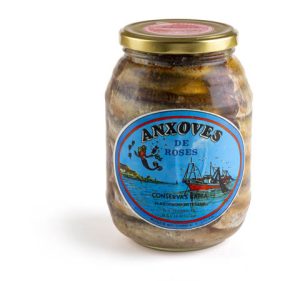
Anchovies in salt
Anchovies in jars of coarse salt are the traditional format for our canned fish. In the past, they were distributed in large glass jars and sold individually wrapped in brown paper. Many people still want to clean the coarse salt off anchovies under the tap, separate the fillets and season them with oil and pepper. Anxoves de Roses – Conserves Bahia, founded in 1960 and dedicated to marine preserves since 1980, continues to distribute its delicious preserved anchovies in different formats, from small homemade jars of 12-14 pieces, to the classic 4 kilo jar, with 150-160 pieces.
Company: Anxoves de Roses- Conserves Bahia
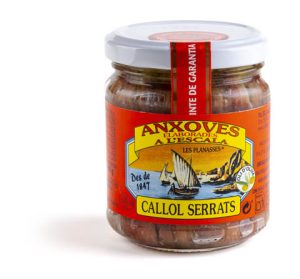
Anchovies in olive oil
Consumer habits and the way we eat have changed so much that anchovies, like many other gastronomic delights, are now sold ready to eat. Half a century ago, if they were not prepared at home, anchovies were bought by the unit, desalted, the central bone removed, dressed and… to the table! Today, Callol Serrats sells the highest quality anchovy fillets in olive oil, packaged in glass jars. Ready to serve and eat.
Company: Anxoves Callol Serrats- L’Escala
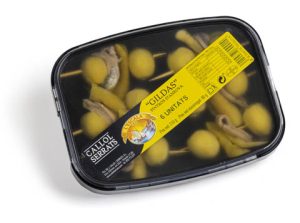
Gildas Anchovy skewers
The colourful banderillas – a toothpick threaded with an olive stuffed with anchovy and pieces of pickled carrot, pepper, and cucumber – were very popular at vermouth time. The banderilla is back, but monochromatic, a bright deep green, invented in the Basque Country, in a bar in San Sebastian at the end of the 1940s. A green olive, an anchovy fillet and a piparra, which is nothing more than a thin and long green chilli. Someone called it Gilda, because it was “green, salty and spicy”, thinking of the character played by Rita Hayworth in a film released in 1946, which scandalized society at the time. They nailed it at Can Callol Serrats.
Company: Anxoves Callol Serrats- L’Escala
Spring-caught anchovy essence
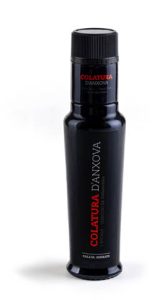
During the process of preserving anchovies in brine, a liquid emerges that our ancestors called liquamen or garum. The anchovy caught in the spring months, when oily fish is at its plumpest and tastiest, is aged for longer in the containers, so the liquid it releases contains the finest essence of the sea. Any impurities are then filtered out, and Callol Serrats bottles the juice that is strained off, a flavour enhancer with a subtle marine aroma.
Company: Anxoves Callol Serrats- L’Escala