


Honey is a powerful expression of the landscape. Botany enthusiasts, except vegans, tend to be fans of this sticky, very sweet and aromatic substance that bees (Apis mellifica) make from the nectar of flowers and deposit in the honeycomb (beeswax) to serve as food for their young.
The Girona region is a honey-producing area, with beekeepers who move their hives from the coast to the high mountains to take full advantage of the seasonal blooms. There are light honeys, dark honeys, yellow, brown and grey ones. There are ones made with heather, strawberry tree, chestnut tree, oak, rosemary or userda. Multi-flower honeys vary from place to place, displaying different colours, flavours, and aromas. This depends on the territory and the beekeeper, who moves the hives at just the right time according to their judgment, knowing that the bees collect nectar indiscriminately. And so, there are both mountain honeys and lowland honeys. Honeys from dry places and honeys from areas with generous rainfall. There are botanical garden honeys, urban honeys or honeys from a plantation.
Honey is used by herbal enthusiasts to sweeten their teas. It is used in cooking for traditional dishes, such as cod with honey; to sweeten soft cheese, to make cakes or to eat with bread when we are in a hurry. Honey, honey!
Honey with the 2025-2026 Girona Excel·lent seal
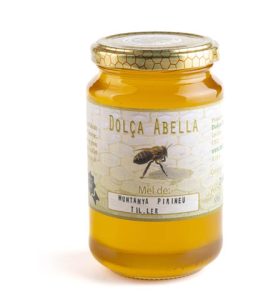
Linden blossom Pyrenean mountain honey
Dolça Abella defines itself as a small family beekeeping business that lives with its bees. They are producers of honey, pollen, propolis and wax, and have their factory and shop in Crespià, although they move according to the optimal flowering times of the different species of interest to honey production, in protected areas and in different places and natural parks in the Girona regions, from the coast to the Pyrenees. The mountain honey from the Pyrenees made from linden has been collected in Llanars, in El Ripollès, and stands out for its characteristics as a pure linden flower honey or one with a high percentage of nectar from this species. The fruity notes with a balsamic component, reminiscent of menthol, a bitter finish and an expectorant sensation are very noticeable.
Company: Dolça Abella
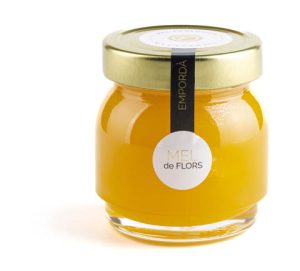
Mil flors honey
The bees of Mas Fuertes produce honey of great aromatic complexity and a unique identity, flying around a farm where biodiversity is the centre of the production system. The hives are surrounded by wild nature and vineyards, olive groves and lavender fields cultivated in certified organic production and following the principles of regenerative agriculture. This rich and balanced environment provides the bees with a variety of nectars that results in a honey of fresh balanced sweetness, with herbaceous nuances, an intense floral fragrance, notes of lavender and fennel, and a slightly fruity background.
Company: Mas Fuertes
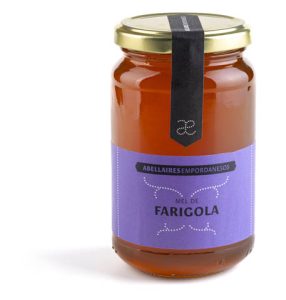
Thyme honey
Abellaires Empordanesos is a company founded in 1983 in Garriguella, in L’Alt Empordà. Thyme honey is produced especially in spring, when this woody bush of the labiate family blooms. The Mediterranean maquis shrubland, with little rainfall, plagued by sea storms and winds, favours a special flora and in spring, resistant and aromatic thyme bushes bloom. Amber in color, this thyme honey is sweet but with a touch of acidity, and is floral and intense.
Company: Abellaires Empordanesos
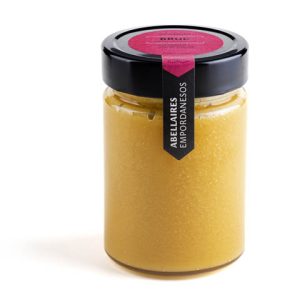
Creamy heather honey
Heather honey is one of the most sought after and valued by enthusiasts for the harmony it offers between sweetness, bitter tones and a delicate salty touch. It is amber in colour, creamy, extraordinarily aromatic and floral, while in the mouth it is reminiscent of caramel. The Abellaires Empordanesos collect this creamy heather honey in the spring in the maquis shrubland of the Catalan coast, full of different species of proud heather.
Company: Abellaires Empordanesos